Sunday, February 25, 2007

French Sports

February 25,2007

The French like sports.

Two popular sports are rugby and soccer. Rugby was created in England in 1823 when Willium Webb Ellis grabbed the ball during a game of soccer. Rugby is like soccer but you use your hands.


Every village in the Pyrenees has a rugby team.

Soccer began in China in the second century and came to Europe in the 16th century. France won the World Cup in 1998 against Brazil 3-0. France hasn't won since.


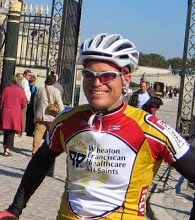
Cycling is another of France's favorite sports. The cycle originated in Scottland in 1839. It had a big front wheel and a small back wheel.The modern (The chain-drive) cycle was created 1885 by the Scottish. The chain is used to transfer power from the pedals to the wheel. It is used on vehicles like cycles and motorcycles.

The Statue of Liberty


Johann was researching the Statue of Liberty on Wikipedia, www.wikipedia.org

Frederic Auguste Bartholdi made the statue
Liberty Enlightening the World for the United States in 1884. The statue was a gift from France.


The Statue of Liberty is 151 feet and one inch tall! The crown has seven points which symbolize the seven seas. It's made out of metal, copper.

The Statue of Liberty is in New York City and immigrants see the statue when they come to the United States.

Saturday, February 17, 2007

Laboratoire Arago


Yesterday we went to the aquarium in Banyuls sur Mer. It is part of the Labatoirre Arago and run by the Universite de Paris. The tickets cost 8.80 Euros and it was worth it.


The jelly fish, les meduses, were see-through and we think if you saw them eating, you could see their food getting digested. They looked blue because the walls of the tank were blue, but they're really the color of glass.


The sea spider had eight legs just like a spider, but with a hard shell and we think it was missing a leg (you can see the holeon the left!) It shared a tank with a brown scorpion fish, probably because the scorpion fish couldn't hurt the sea spider with it's tough shell.


The octopus, la poulpe, was red with bumpy white dots. It swam sideways using it's arms, or tentacles. The eyes were on top of it's head looking to the side.


As we were walking out, the director of the aquarium stopped us and told us we could touch the sea animals in the tank with our hands! There were starfish, les asterides, sea cucumbers (concombres de mer), small fish, and sponges (spongaires). When we touched them, they moved in our hands. The starfish was hard and bumpy. The sponges were squishy and the salt water was cold and stung my hand.


Karl gripping his Langenscheidt French dictionary and pointing out some groupers and loups de mer in the tank. Johann posing for the camera, notebook in hand.

Monday, February 12, 2007

Bonjour notres amis!


Chateau de Castelnou

February 10, 2007 (Grandpa Jennings' birthday – Happy Birthday!]


We are sitting down at the computer to write about our adventure yesterday when we went to Castelnou. “What did we do at Castelnou?” Karl asks. First, Castelnou is the name of both a restored castle and the name of it's surrounding village.
We went with our friends, the Kisker family. We drove less than an hour to get there. On the way we could see the eastern Pyrénées mountain range and the Pic de Canigou; they were snowcapped!


We went inside the feudal castle. We had to walk a long way first through a large garden. The steps up to the castle were made of rocks. The handrail was made of thick rope. The doors were very huge; they were made of heavy wood. In one door there was a tiny window covered with a metal net so someone could look outside of it to see who was there. The door knocker was a round heavy piece of metal attached to the wood with big bolts. Above the door was a shield with a picture of the castle on it.


There was a courtyard with a fountain and stone staircases going in different directions. In one room we saw knights in armor. They had shields and swords made of metal. We picked them up. They were hard. In another room, there were archers with bows and arrows. We could not touch the bows and arrows. Upstairs, there was a huge room. On the walls hung lots of colored quilts. In the middle of the room, was a long wooden table with iron chairs on either end. At one end of the room, there was a stage where Johann and mom danced. We looked out the tall windows and we could see the garden far below. We went up to the barracks on top of the castle. They were long and wide, a perfect spot for running. It was v v v v v v v e e e e e e e e r r r r r r r r r r y y y y y y y y windy!! From the top, you could see the look out towers and the mountains far away.

After we left the castle, we walked through the village. The roads were very narrow, about as wide as a couch. Everything was made of rocks: the roads, the walls, the houses, the garbage bins (just kidding). There were no sidewalks; you just walk in the streets or up and down tiny stone staircases. There were archways made of rocks that go over the roads. The doors to the houses are small. The houses look like Hobbit houses.

Monday, February 05, 2007

From Karl to his classmates (and everyone else!)

Matt, yes I am having fun with my road-bike, Johann is having fun with his bike to.
P. S. Are you guys learning to type on the keyboard yet?
John, yes there are Pokemon cards in France.
Becca, we’ll be back in April.

How is Iowa different from France?
(from Marissa)
There are some things that are different between the Southeastern part of France and Iowa, and some things that are the same. We have learned a lot about how these two places are the same and different in their landforms and climate. Right now, in Janurary, it has been about 7 degrees Celcius here in the mornings. That is about the same as 45 degrees Fahrenheit (Look at the 3rd grade Science book page D36 to see a thermometer.) It has been about 12 degrees C in the days. Can you guess the temperature that is in Fahrenheit? We don’t have a thermometer here. We heard the temperature in Iowa is below freezing and that you are getting snow!! Some days here it is very windy. The wind comes down off the mountain top.

Some of the land here is like Iowa: mostly flat plains. They call the flat area here The Roussillon Plains. The Plains go from the mountains all the way down to the Mediterranean Sea. There are sandy and rocky beaches along the Sea (sort of like the Mississippi River).

There are many mountains here (not like in Iowa). They are part of a mountain range called the Pyrenees. The mountains are steep and made of rocks. That makes lots of valleys and canyons. We learned canyons are deep valleys with very steep sides. We used an old egg carton to show how the landforms are here. Most of the roads are made from rocks. Even our rental house is made with big rocks. The rocks outside the door are made into an arch.

Here there are palm trees, orange trees, and trees called cork trees (the bark is cut off and used to make cork for wine bottles). In Iowa there are willow trees but we haven’t seen any here.

We have learned that animals depend on trees for food and shelter. Wild boar live in the forests here. The chestnusts grow on trees and the wild boar eat the chestnuts. Pinenuts grow on some of the pine trees. Some people eat the chestnuts. We eat the pine nuts in our salad. One day we saw hunters hunting the wild boar.

What have you been doing?
Megan,
I have been riding my road bike, looking in Roman castles (built two-thousand years ago),
Playing scrabble, UNO, soccer and learning to speak French. Everyday we practice French. Sometimes we use the marker boards. Sometimes we use flashcards. We listen to French stories and songs and videos. We use French when we shop. I bought a stamp at the Post Office where I used French.

How fast is your road bike?
Tanner,
My road bike/race bike has 16 speeds.
The lowest speeds are the sprinting speeds, the highest speeds are the spinning speeds.
I’ve biked half-way up the mountain three times already. The last time I got cramps on either side of my back bone.
How is France? (Dakota)
GGGGGGGGRRRRRRRREEEEEEEEAAAAAAAATTTTTTTT!!!!!!!!!
The food
Last night for dinner mom and dad had an Egyptian dish called kosherie (pronounced, CO-shAIR-ee), as for me and Johann……..we had pizza.
Last night we didn’t have dessert but tonight we are going to have lots of chocolate. We bought 7 kinds of chocolate. Coeur Truffe (pronounced koor-TRuFAY) is my favorite so far. My next favorite is the creamy Fondant chocolate. Then I like the Coeur Truffe a l’Orange. I haven’t yet tried this last store-bought kind, but it is called Coeur Praline. We bought 3 kinds of homemade chocolates at the bakery. One is nutty and is covered in milk chocolate. The next one is dark chocolate and the very last one is all milk chocolate. France is known for their chocolates. The end.

Le Chateau Royale de Collioure


Dear Michael,

I am good. Yesterday, I went to Collioure with my whole family to see the castle. The castle was called Chateau Royal. It is next to the Mediterranean Sea. The water was dark blue. It was splashing on the rocks.
The castle wall was made of rocks. I guessed the wall was 100 feet high. It went all the wall around the castle.


We got to go inside. Karl said, “It’s spooky.” We walked through underground passages. They were like tunnels. Inside the castle there were barracks. They look like the inside of a barn. That is where the soldiers used to sleep.
There were signs all around the castle with Roman numbers on them. Mom says, these numbers tell us when each part of the castle was built. The barracks were built in XVIIth C. That means they were built in the 17th century. (The X=10. V=5, I=1). Now it is the 21st century. So, the barracks were built 4 centuries ago, or 400 years ago. (I did the math with my mom. You can make up some Roman math problems, too.) It was fun there.

We are wondering what you are learning about in science and math? Here we are studying rocks, using the European money to buy things and doing some worksheets the teachers sent.

Johann